How Do You Read a ComEd or Ameren Illinois Bill?
Learn how to read a Commonwealth Edison or Ameren Illinois bill, from delivery and supply charges to meter readings, with guidance from Gatby on the…

Written by Hash Manesia
Published on Oct 4, 2026
|
8 min read
Reviewed by Jeff Mahoney
How Do You Read a ComEd or Ameren Illinois Bill?
What Sections Make Up an Illinois Utility Bill?
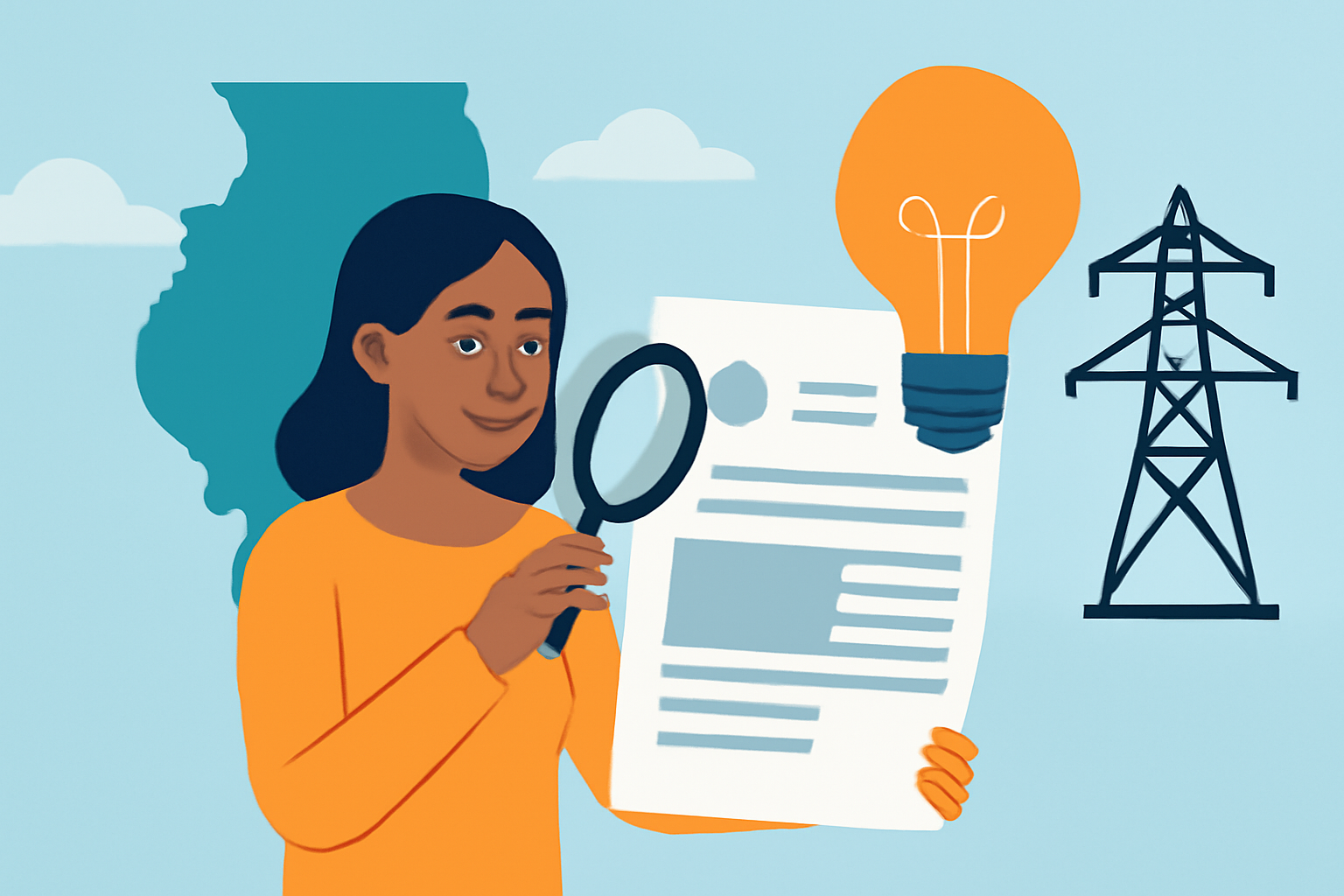
A Commonwealth Edison or Ameren Illinois bill is organized into clearly defined sections designed to help customers understand what they are paying for and why. While the exact layout can differ slightly between the two utilities, most bills include an account summary, a breakdown of charges, usage history, and important account dates. Understanding this general structure makes it much easier to locate the information that matters most, whether that is a due date, a usage total, or a specific charge.
- Account summary: shows the total amount due, payment due date, and any balance carried from previous billing periods.
- Charges breakdown: separates delivery-related charges from energy-related charges so customers can see how each dollar is allocated.
- Usage history: displays how much energy was used in the current period compared to prior months, often in a small graph or table.
- Meter information: lists meter numbers, reading dates, and whether the reading was actual or estimated.
- Messages or notices: utility announcements, rate change notifications, or reminders about assistance programs.
What Is the Difference Between a Delivery Charge and a Supply Charge?
One of the most important distinctions on any Illinois utility bill is the difference between delivery charges and supply charges. Delivery charges pay Commonwealth Edison or Ameren Illinois for maintaining the poles, wires, and infrastructure that physically bring energy to a home or business. These charges cover the utility's role as the entity responsible for transporting energy safely and reliably, regardless of who a customer chooses to buy their energy from.
Supply charges, on the other hand, pay for the actual energy consumed. This portion of the bill reflects the cost of the electricity or natural gas itself, which may be provided through a chosen energy supplier or through the utility's own default arrangement. It is important to remember that Commonwealth Edison and Ameren Illinois function as utilities that deliver energy, not as suppliers that sell it. Keeping this utility-versus-supplier distinction in mind helps customers understand exactly what each portion of their bill represents.
How Does Meter Reading Affect Your Bill?
Meter readings form the basis for calculating usage charges on every bill. When a meter is read directly, either by utility personnel or through automated technology, the reading is considered an actual reading and reflects real, measured consumption. In some cases, if a meter cannot be accessed or read on schedule, the utility may generate an estimated reading based on historical usage patterns for that account.
Estimated readings are typically adjusted once an actual reading becomes available, which can cause a bill to appear unusually high or low in a later cycle as the correction is applied. Reviewing whether a bill is based on an actual or estimated reading can help explain unexpected changes in the amount due and clarify whether those changes reflect real usage shifts or simply a reconciliation between estimated and actual figures.
What Is a Billing Cycle and How Does It Work?
A billing cycle is the period of time between two meter readings that determines the usage and charges reflected on a single bill. Commonwealth Edison and Ameren Illinois each set billing cycle start and end dates based on meter reading schedules, which are often tied to geographic routes or account groupings rather than a fixed calendar date.
Because these schedules depend on when a meter is actually read, cycle length can vary slightly from month to month. A cycle might run a few days longer or shorter depending on weekends, holidays, or scheduling adjustments made by the utility. This variation is normal and does not necessarily indicate a billing error, though customers who track their cycle dates over time can better understand fluctuations in their usage totals.
How Can You Identify Who Supplies Your Energy?
Illinois bills typically list two separate parties involved in providing energy: the delivery utility and the energy supplier. Commonwealth Edison and Ameren Illinois are always listed as the delivery utility, since they are responsible for transporting energy to the property regardless of who sells it. The supplier listed on the bill may be a company the customer has actively chosen, or it may reflect a default arrangement facilitated by the utility when no alternate selection has been made.
To identify the current supplier, customers can look for a clearly labeled section, often near the supply charges, that names the entity responsible for the energy portion of the bill. Cross-referencing this section with the delivery charges section makes the utility-versus-supplier distinction easier to see at a glance.
What Role Does the Illinois Commerce Commission Play in Your Bill?
The Illinois Commerce Commission (ICC) oversees the regulatory framework that governs how Commonwealth Edison and Ameren Illinois deliver energy and how charges are structured on customer bills. As the state regulator, the ICC reviews utility practices, approves certain rate structures, and enforces consumer protection standards designed to ensure billing practices remain transparent and fair.
While the ICC does not set the price of the energy supply portion of a bill in a competitive market, it maintains oversight of delivery charges and the rules that utilities must follow when billing customers. Understanding that the ICC plays this oversight role can help customers know where to turn if they have concerns about utility practices that fall outside the scope of energy supply choice.
How Can You Spot Errors or Unusual Charges on Your Bill?
Reviewing a bill closely each month is one of the simplest ways to catch billing mistakes before they become larger problems. A few consistent habits can make this process easier and more effective.
- Compare usage totals month to month and look for sudden spikes or drops that do not align with seasonal patterns or changes in household activity.
- Check whether each bill is based on an actual or estimated meter reading, since estimated readings can lead to later adjustments.
- Confirm that the billing cycle dates align with the previous bill, ensuring there is no unexplained gap or overlap in the period covered.
- Review both the delivery and supply sections separately to make sure each charge type reflects expected usage and account status.
- Watch for new fees, messages, or notices that were not present on prior bills and follow up if their purpose is unclear.
How Does Gatby Help You Understand and Manage Your Energy Plan?
Reading a Commonwealth Edison or Ameren Illinois bill closely can raise questions about how current energy plans compare to other options available to Illinois residents. Gatby helps customers make sense of these details by reviewing bill information and helping identify energy plans that align with a household's usage patterns and preferences. Rather than replacing the utility's role in delivering energy, Gatby focuses on the supply side of the equation, helping customers find and connect with energy plans that suit their needs.
By breaking down complex bill details into clearer terms, Gatby supports Illinois residents in making informed decisions about their energy plans, without altering the delivery relationship they maintain with Commonwealth Edison or Ameren Illinois.
Frequently Asked Questions
What is the difference between delivery and supply charges on an Illinois utility bill?
Delivery charges pay Commonwealth Edison or Ameren Illinois for transporting energy through their infrastructure, while supply charges pay for the actual energy consumed, which may come from a chosen supplier or a default arrangement.
Why does my bill sometimes show an estimated meter reading instead of an actual one?
If a meter cannot be read on schedule, the utility may generate an estimated reading based on past usage patterns. This estimate is typically reconciled once an actual reading is obtained, which can cause adjustments in a later bill.
Why does my billing cycle length change slightly from month to month?
Billing cycles are tied to meter reading schedules, which can shift due to weekends, holidays, or route scheduling. This can cause a cycle to run a few days longer or shorter without indicating an error.
How can I tell who my energy supplier is on my bill?
Look for a labeled section near the supply charges that names the entity responsible for the energy portion of your bill. Commonwealth Edison and Ameren Illinois will always appear as the delivery utility, separate from the supplier.
What does the Illinois Commerce Commission actually regulate on my bill?
The Illinois Commerce Commission oversees utility delivery practices, certain rate structures, and consumer protection standards for Commonwealth Edison and Ameren Illinois, helping ensure billing practices remain transparent and fair.
How does Gatby help if I have questions about my utility bill?
Gatby helps customers review their bill details and identify energy plans that align with their usage patterns, focusing on the supply side while leaving the delivery relationship with the utility unchanged.
Related reading
Let Autopilot take energy shopping off your plate — just enter your zip code
Table of Contents
Table of Contents
You may also like